Keyword Research in the UAE: Why Most Businesses Get It Wrong (And How to Fix It)
Last March, I sat across from the marketing director of a Dubai-based e-commerce company. She had a spreadsheet open — 400 keywords, neatly organized, color-coded by search volume. She’d spent two months building it. “We’re ranking for almost none of these,” she told me. “We’ve published 60 articles. Traffic is flat.” I looked at the list. The problem jumped out within seconds. Every keyword was in English. Her customers were searching in Arabic, Arabizi, and a messy blend of both. She’d built a beautiful map to a city she wasn’t in.
That conversation stuck with me because it captures what goes wrong with keyword research in this region better than any case study could. The UAE isn’t a single market. It’s a collision of languages, nationalities, purchasing behaviors, and search habits packed into a country smaller than South Carolina. And if you’re doing keyword research the same way you’d do it for London or New York, you’re leaving serious money on the table.
The Problem With Copy-Paste Keyword Research
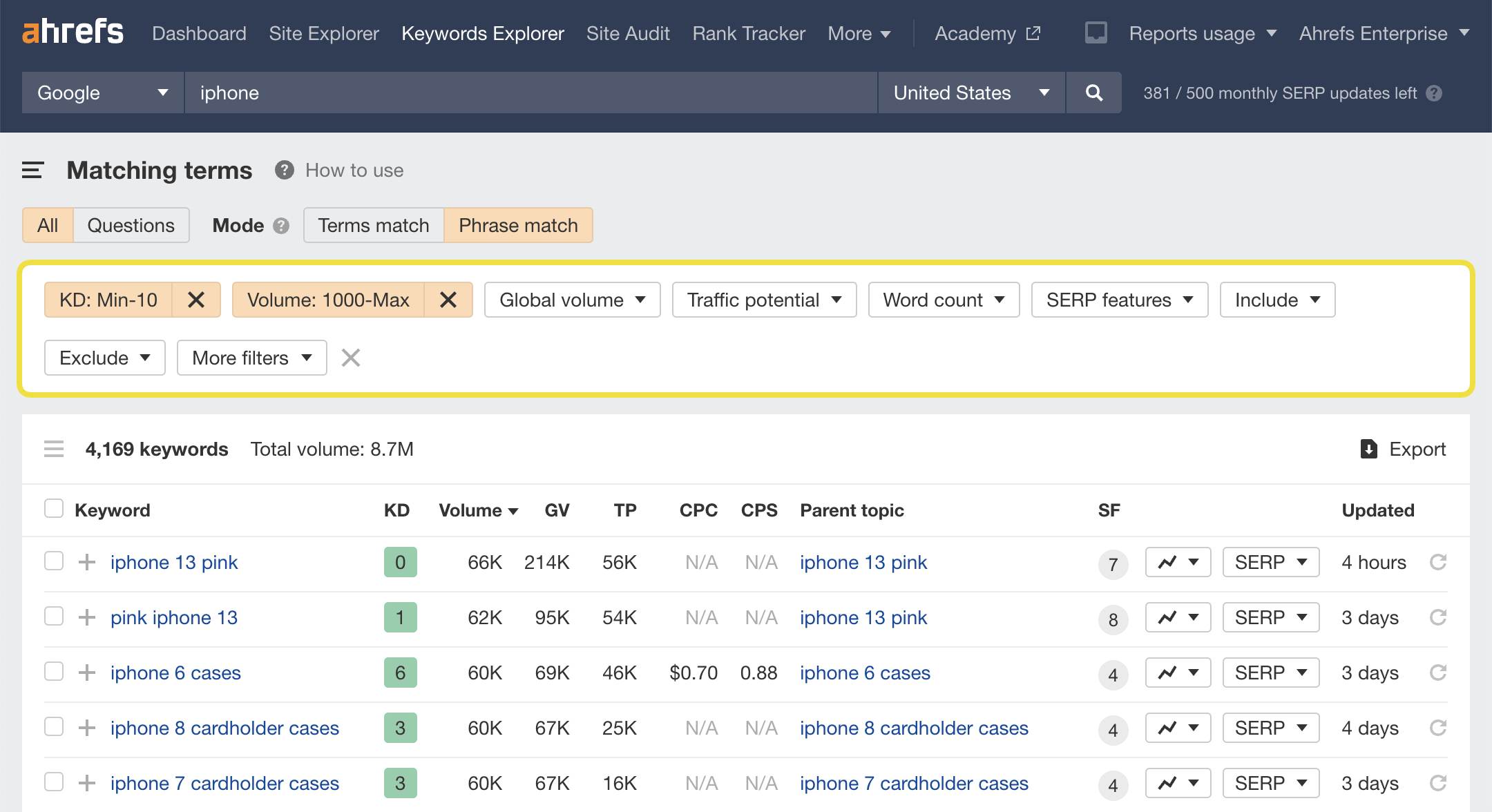
Here’s what typically happens. A business hires an agency or assigns someone in-house. That person opens Ahrefs or SEMrush, punches in a few seed keywords in English, sorts by volume, picks the ones that seem relevant, and builds a content calendar. Standard playbook. Works fine in the US or UK.
In the UAE, that playbook misses the point entirely. Start with the demographics: over 88% of the UAE population are expatriates. Indians, Pakistanis, Filipinos, Egyptians, British, Americans — each group searches differently. An Indian expat looking for a money transfer service doesn’t search the same way a British expat does. The intent is similar. The language, phrasing, and platform are often completely different.
Then there’s the Arabic question. Roughly 25–30% of all searches in the UAE happen in Arabic, and that number shifts dramatically depending on the industry. Real estate? Heavy Arabic search volume. SaaS tools? Almost entirely English. Legal services? Split right down the middle. If your keyword research doesn’t account for this, you’re making decisions with half the picture.
And Arabizi — that informal transliteration where people type Arabic words using Latin characters and numbers (like “3arabiya” for عربية) — barely shows up in any keyword tool. Yet people use it constantly in searches, social media, and messaging. Google understands a good chunk of it. Most marketers ignore it completely.
What Keyword Research Actually Tells You
Strip away the technical jargon and keyword research is just listening. It’s hearing what your potential customers are actually asking for, in their own words, in their own language. The numbers tell you how many people care. The phrasing tells you what they’re worried about. The gaps tell you where competitors haven’t shown up yet.
In the UAE, this listening exercise is more complex — but also more rewarding. Because the market is fragmented and multilingual, most businesses only scratch the surface. That means the businesses willing to dig deeper find pockets of demand with almost no competition. I’ve seen companies triple their organic traffic in six months by targeting Arabic long-tail keywords that their competitors hadn’t even considered.
The real value isn’t a list of words. It’s a map of demand. And in a market like the UAE, where consumer behavior doesn’t follow the Western template that most SEO guides assume, that map can be a genuine competitive advantage.
What Separates Useful Keyword Research From Busywork
Good keyword research for the UAE market has a few qualities you won’t find in generic how-to articles.
First, it’s bilingual at minimum. You need English and Arabic keyword sets, researched separately, because direct translations almost never match how people actually search. “Best restaurants in Dubai” doesn’t translate cleanly into an Arabic phrase people would type into Google. The Arabic search behavior around restaurants involves different modifiers, different qualifying words, and often different intent entirely.
Second, it accounts for seasonality that’s specific to this region. Ramadan shifts search behavior across almost every industry. The summer exodus — when a significant chunk of residents leave the country — creates dips and surges that don’t exist in other markets. Back-to-school season, Eid, UAE National Day, Dubai Shopping Festival — each one reshapes what people search for and when.
Third, it segments by emirate when that matters. Someone in Abu Dhabi searching for “villa for rent” has different expectations and price points than someone in Ajman typing the exact same query. Google knows this, and your keyword strategy should too. Location modifiers behave differently here than in larger countries — “near me” searches skew heavily toward Dubai and Abu Dhabi simply because of population density.
Fourth, it includes intent mapping that goes beyond the basic informational-transactional split. UAE consumers — particularly in high-ticket categories like real estate, automotive, education, and healthcare — run long research cycles. They compare internationally. They check reviews on platforms that aren’t always indexed well by Western keyword tools. Understanding where a keyword sits in that buying journey changes how you use it.
Why This Matters More Now Than It Did Three Years Ago
The UAE’s digital economy has been growing at roughly 8–10% year-over-year. Google still dominates search here, but the way people use it has shifted. Voice search — in both English and Arabic — is climbing fast. Zero-click searches, where Google answers the query directly on the results page, have eaten into traffic for generic informational keywords.
At the same time, the cost of paid advertising in the UAE has risen sharply. CPCs for competitive keywords in sectors like real estate, finance, and education have doubled or tripled in some cases over the past two years. Organic search, done properly, is one of the few channels where you can build compounding returns without watching your acquisition costs spiral upward.
But organic only works if you’re targeting the right keywords. And “right” doesn’t mean highest volume. It means the intersection of realistic ranking difficulty, genuine commercial intent, and alignment with what your business actually offers. That intersection is harder to find in the UAE because the data is messier, the competition is less predictable, and the consumer base is more diverse. Which, again, is exactly why doing it well gives you such an edge.
How to Do Keyword Research That Actually Works Here
If you’re doing this yourself or evaluating an agency’s work, here’s what to look for.
Use multiple tools, not just one. SEMrush and Ahrefs have decent English data for the UAE, but their Arabic data has gaps. Google Keyword Planner, despite being designed for advertisers, gives you volume ranges for Arabic terms that other tools miss. Google Trends with the UAE filter is underrated for spotting seasonal patterns and emerging queries. And don’t ignore Google’s autocomplete and “People Also Ask” features — they’re free, real-time, and reflect what actual UAE-based users are typing right now.
Build separate keyword clusters for English and Arabic. Don’t translate — research each language independently. The Arabic keyword set will have its own structure, its own long-tail opportunities, and its own competitive dynamics. Treat it as a parallel project, not an afterthought.
Map keywords to pages, not just topics. Every keyword or keyword cluster should point to a specific page on your site — either one that exists or one you need to create. If you can’t answer “where does this keyword live on our site?” then the research isn’t finished.
Check the actual search results before committing. Google a keyword before you target it. Look at what’s ranking. If the top ten results are all major publications or government sites, you’re probably picking a fight you won’t win. If the results are thin, outdated, or poorly matched to the intent, that’s your opening.
Revisit and update quarterly. The UAE market moves fast. New competitors enter. Consumer preferences shift. Regulations change (especially in finance and healthcare). A keyword list from January might be outdated by June. Treat keyword research as an ongoing process, not a one-time project.
Tailoring Your Approach by Industry
For e-commerce businesses, focus on product-level keywords with commercial intent — “buy,” “price in UAE,” “delivery to Dubai.” Long-tail product keywords with specific attributes (color, size, model number) convert better and face less competition than broad category terms.
For service businesses — law firms, clinics, consultancies — target problem-aware keywords. People don’t search for “best lawyer in Dubai” until they’ve first searched for the problem itself: “overstayed visa UAE what to do” or “employer not paying salary Dubai.” Capture them at the problem stage and you own the entire journey.
For real estate, layer location data heavily. Emirate, neighborhood, building name, “near [landmark]” — these modifiers are where the real opportunity lives. Broad terms like “apartments for sale in Dubai” are dominated by Bayut, Property Finder, and Dubizzle. You won’t outrank them. But “studio apartment JLT pet friendly” is a different story.
For hospitality and tourism, think about source markets. Tourists from Saudi Arabia search differently than tourists from Germany. Build keyword sets that match the language and expectations of your top three or four source markets, not just generic travel terms.
The Map That Actually Leads Somewhere
That marketing director I mentioned at the beginning? We rebuilt her keyword strategy from scratch. Separate English and Arabic research. Emirate-level segmentation. Intent mapping tied to her product catalog. Within four months, organic traffic was up 140%. More importantly, the traffic was converting — because the keywords matched what her actual customers were looking for, in the language they were using.
Keyword research isn’t glamorous work. There’s no viral moment in a spreadsheet. But in the UAE, where the gap between businesses doing it well and businesses doing it poorly is enormous, it might be the single highest-leverage marketing activity you can invest in. The information is there, waiting in search bars across the country. Someone is going to capture that demand. Might as well be you.